
Set up
Check your parts
Check you have all the major parts.
4x 4080 700mm
2x 4080 600mm
1x 4080 484mm
1x 4080 394mm
2x 4080 187mm (only aluminium top plate)
2x 4040 580mm
2x 4040 410mm
1x 4040 394mm
2x 4040 350mm
15x L bracket with caps sets
4x double brackets
4x universal brackets
1x Allen key set
1x spanner
1x spirit level
Notes
Before starting
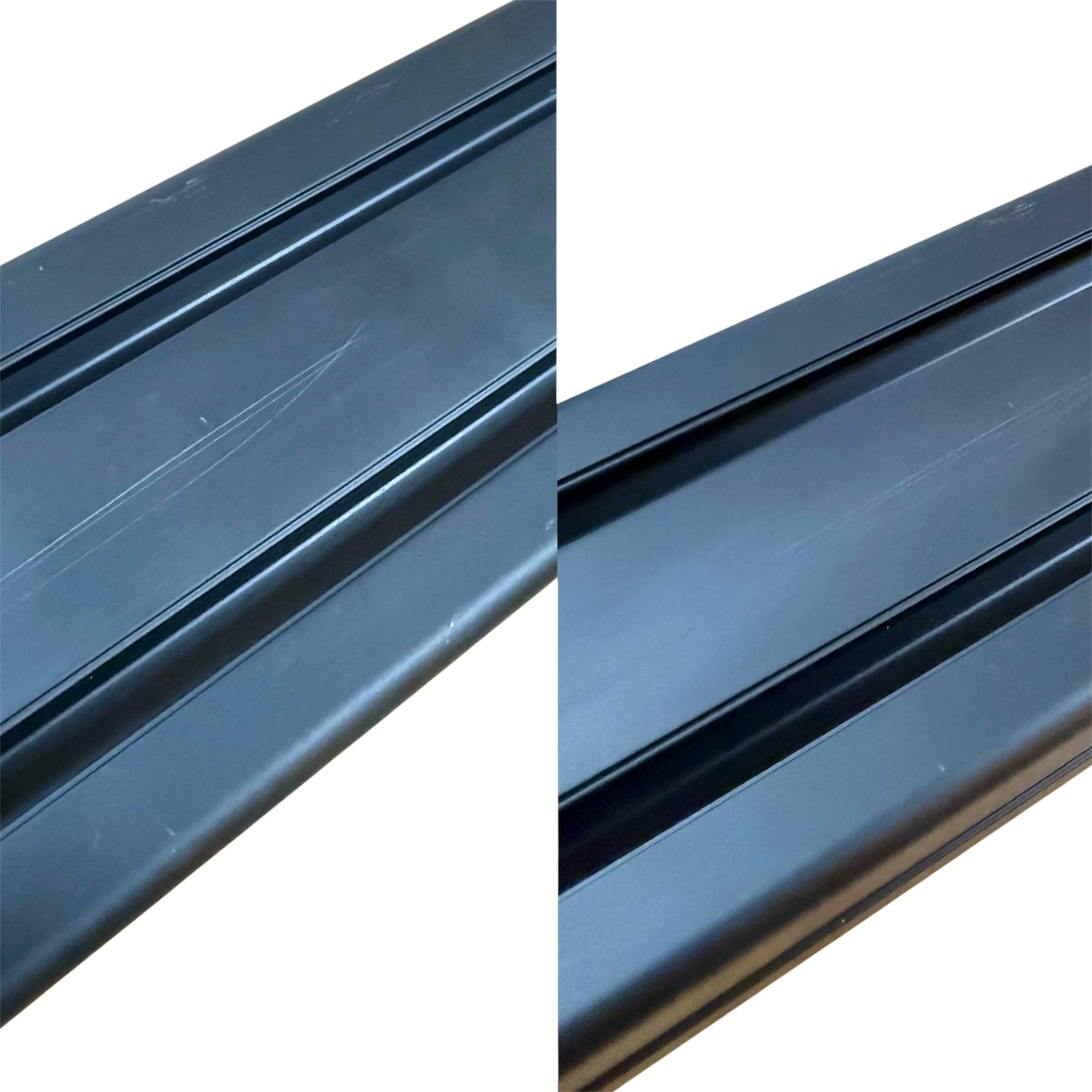
The profiles are anodised aluminium. They can be scratched without careful assembly; however, if there does appear to be a scratch, most of the time they can be rubbed off with your fingers.

Notes
Please reference out fastener guide to check the names and sizes of your fasteners to ensure you are using the correct ones for each step.

Notes
Use the 3D model, images, and drawings on the product page to check how the rig should look.
The final image on the product page is a 3D model that can be viewed on the majority of phones, tablets, and computers.

Notes
The L brackets with caps may need the tabs broken off for some accessory mounting.
These can be easily snapped off with leverage from a flat-head screwdriver.

Notes
Be careful with the edges of the aluminium profile as they are sharp and can damage floors with the weight of the seat.

The Build
We will start the build by assembling the pedal area.
This will require
2x 700mm 4080
2x 410mm 4040
8x L brackets with cap
4x wheels

The Build
Build this frame using
2x 4080 700mm pieces
2x 4040 410mm pieces
6x brackets with cap
12x t head bolts
12x collar / flange nuts
1x flexible handle
2x M8x20 cap screws + sliding nuts
The orange circle areas will have brackets left out and attach the handle to the 410mm piece between the circles.

The build
Attach 4 wheels. Two to each 4040 piece. The wheel brackets will come in kits with all the fasteners included.
The build
Attach 2x end blocks on the seat side and 2x standard end caps caps to the other side to finish the pedal area.

The build
Seat Area
Next step is to build the seat area

The build
Start by adding the side guides to both remaining 700mm pieces using the short counter sunk bolts.
Use the 350mm pieces to space these out the correct distance.
Parts:
12x M8 sliding nut
12x M8x16 countersunk head bolt

The build
Join the parts by adding 2x 580mm 4040 pieces as beams. Place the small spacers underneath the 580mm 4040 pieces (see next photo).

The build
These spacers slightly increase the height of the 580mm cross pieces.

The build
Add 6x L bracket with caps (using 12x t head bolts and 12x collar / flange nuts) to secure the cross pieces.
The spacer fit in between the both the aluminium pieces where the arrows are pointing.

Pre-assemble nuts and bolts into 4 of the aluminium L-shape double brackets and slide them into position along the outside of the frame. Slide them along in a lifted position to prevent scratches on the outside and leave them loose.
Mount these as far forward as possible.
Parts:
4x double brackets
16x M8x16 button head bolt
16x M8 sliding nut

These are the double brackets for the uprights

The build
Use the spirit level on top of the upright to make sure it’s vertical and not leaning over, then tighten the bolts to lock in the position.
Try to align the two uprights as close as possible by using the joint in the horizontal bars as a reference.

The build
Slide / drop a 4080 600mm into each side. Keep everything loose to allow you to slide one bolt at a time into the bottom of the upright.

The build
At this point its best to add the wheels. They will allow you to move the rig around while assembling it much more easily.

Steel top plate

Steel top plate
Parts:
1x Top plate steel
4x M8x20mm Button head bolts
4x M8 sliding nuts
4x M8 washers
Preassemble the sliding nuts and button head bolts onto the steel top plate. Use the orange markers / supports to prevent the top plate from dropping down when you slide it in the top.

Steel top plate
Fasten the plate into position so it doesn’t fall. Move the orange markers lower, then loosen the top plate and slide it down the uprights to rest on the orange markers.
The markers allow you to rest the steel top plate while you use your tools to connect it in place.
Slide it evenly (keep it level) down the uprights as it can scratch.

V2 Top plate

V2 top plate
Parts:
2x side brackets
4x M8x20mm countersunk head bolts
2x 4080 187mm
For V2 the plates are attached to the 2x short profiles instead of brackets.

V2 top plate
Parts:
8x M8 sliding nut
8x M8x20mm button head bolt
Slide / drop the top plate supports onto the inside of the uprights.

V2 top plate
Side assemblies attached to the uprights. Try to align these as much as possible.

V2 top plate
Parts:
8x M8x16mm countersunk head bolts
8x M8 sliding nuts
Top plate
Attach the top plate.
V2 top plate
If its slightly misaligned you can unscrew and adjust one of the arms.

Sliding mechanism
Attach two end blocks to the front of the seat area
Parts:
2x end blocks
4x M8 button head bolts
4x M8 washers

Sliding mechanism
Parts:
2x lengthwise connectors
4x M6x25 lever / handle screws
4x M6 washers
4x M8x20 button head bolt
4x M8 sliding nut
Sliding mechanism
Assemble the plastic covers onto the two rectangular aliminium plates. Then fasten them in position. The plastic covers prevent the aluminium plates from scratching the profiles.
On the open side connect the levers to a lengthwise connector (not pictured).

Sliding mechanism
Slide the pedal area in front he back underneath the seat area.
You may need to loosen and jiggle a few things to get them to line up and slide.

Pedal plates
Parts:
6x M8x20 countersunk bolt
1x 4040 396mm piece
1x 4080 396mm piece
6x lever screws
6x M6 t-nut
6x M6 washer
May be required:
Universal brackets
Further T-nuts

Important
The handle and the screw are two separate parts. You can lift the handle to allow it to rotate freely without turning the screw. This means if the profiles get in the way just lift the handle and turn it back.
Please try this out before assembling the pedal area.

Pedal plates
Here is a video demonstrating how the handle can be moved independantly from the bolt.

Pedal plates
To build the pedal plate, start with planning how the pedals will connect. If it’s possible, connect the rear bolts of the pedals directly to the profile.
See some examples of different configurations below.
Always place the front bolts as close to the profiles as possible for maximum rigidity.

Pedal plates
The 396mm long pieces that go between the pedal plates will have a thread in the end, as highlighted in the photo.
The handbrake bar can also be put on the pedal area. You will only need two of the three pieces with threads to complete the pedal assembly.

Pedal plates
If the pedals are too high, the whole assembly can be inverted as shown in this image.

Pedal plates
Add the lever bolts with washers to the pedal plate as shown.
Sometimes the profile gets in the way of turning the lever bolts. The head of the lever bolt can be pulled back to turn the bolt without turning the lever head.
Alternatively, the kit includes a standard bolt that can be used instead.

Pedal plates
Example of a standard pedal assembly for Fanatec, Moza, Simagic without pedals.

Pedal plates
Once the pedal plate is built, the safe assembly method is to disassemble and build the plate up directly, attaching the sides to the horizontal rails. Alternatively, the entire assembly can slide in from the back and along the slots.

Pedal plates
If the pedals are moving but the bolts are tight then the bolts have no turned in the slot as shown in the top slot the bolt is not engaged with anything.
To fix this unscrew your handle 4-8 turns then rescrew it. It should only turn a couple of time before its tight.

Pedal plates
Example of how to build a standard pedal plate with the Fanatec CSL / Moza CRP pedals.

Pedal plates
Slide the pedal assmebly in where the brackets have been left out of the pedal frame.
Once they're in add the final two brackets to the 4040 pieces in the pedal area that were left out to allow the pedals to be slide in.

The build
Attach 2 brackets with cap to the back of the seat area. This will not prevent the pedal area from sliding out.

The Seat
Assembling the seat
Skip this part if you don’t have a seat ready yet. Keep the 350mm pieces aside to attach to the bottom of the sliders, like in the picture.

The Seat
Start by attaching the shortest 4040, 350mm, to the sliders.

The Seat
You will need to manually move the slider to allow access to bolt them down.
Push down hard because the sliders can be hard to move.

The Seat
Attach the slider section to the bottom of the seat. This will require manually moving the slider again.

The Seat
Wedge the slider lever between the two sliders once they are securely attached to the seat. This will require a large amount of force to bend the bar so that it can be attached to the sliders.

Handbrake bar
Parts:
3x bracket with cap
6x t head bolt
6x collar / flange nut
Attach three brackets to the handbrake support bar. This is the last piece of 4080 profile and should be 484mm, the same length as the pedal profiles.

Handbrake bar
Attach this to the left of right upright.
Note: if you don’t want to use a handbrake, this part can be connected to the pedal assembly for extra support. Extra fasteners or brackets may be required.

Handbrake bar
Parts:
2x universal brackets
4x t head bolts
4x collar / flange nuts
Use the universal brackets to attach your shifter, handbrake, and other accessories.
For best results, make sure the bolts are as close to the profile as possible or even connected directly to the profile.

Finishing touches
Finally attach the handled to the uprights and to the pedal area

Finishing touches
Add caps to all exposed aluminium profile faces. A firm push will get them mostly into place, and a few taps will finish them off.

Finishing touches
Fasten the wheelbase to the top plate and check fitment.
We recommend adjusting the seat and pedals before adjusting the wheelbase and top plate, as the top plate is the hardest to move.
If you are unsure which bolt holes to use, check out:

Finishing touches
Once you’re happy with the positions, go through and tighten everything back up.
After the first hour or two of racing, it’s good practice to tighten everything back up again as everything settles into position.

Finishing touches
Finally, mount any accessories and use the included cable management clips to route the cables inside the profiles.
